
INSIGHTS / FORENSIC ENGINEERING / METAL ROOFING
ROOF & ENVELOPE EVALUATIONS
HAIL DAMAGE TO METAL ROOFS
FUNCTIONAL DAMAGE OR COSMETIC CHANGE?
A metal roof may show dozens of hail dents and still shed water.
The question is not simply whether hail struck—but what the storm changed.
KPE FORENSICS
August 2026
THE CENTRAL TECHNICAL QUESTION
Did the hail alter the roof’s ability to shed water?
Metal roofing often makes a hail event easy to see. Dents may be visible across large roof areas, sometimes producing an appearance that looks severe from the ground or in photographs. For an insurance claim, however, visible impact marks are only the beginning of the evaluation.
The central technical question is whether the hail altered the roof’s ability to perform its intended function, particularly its ability to shed water. Answering that question requires attention to the roof system, the location and character of the observed conditions, and any evidence of related water intrusion. It requires more than counting dents.
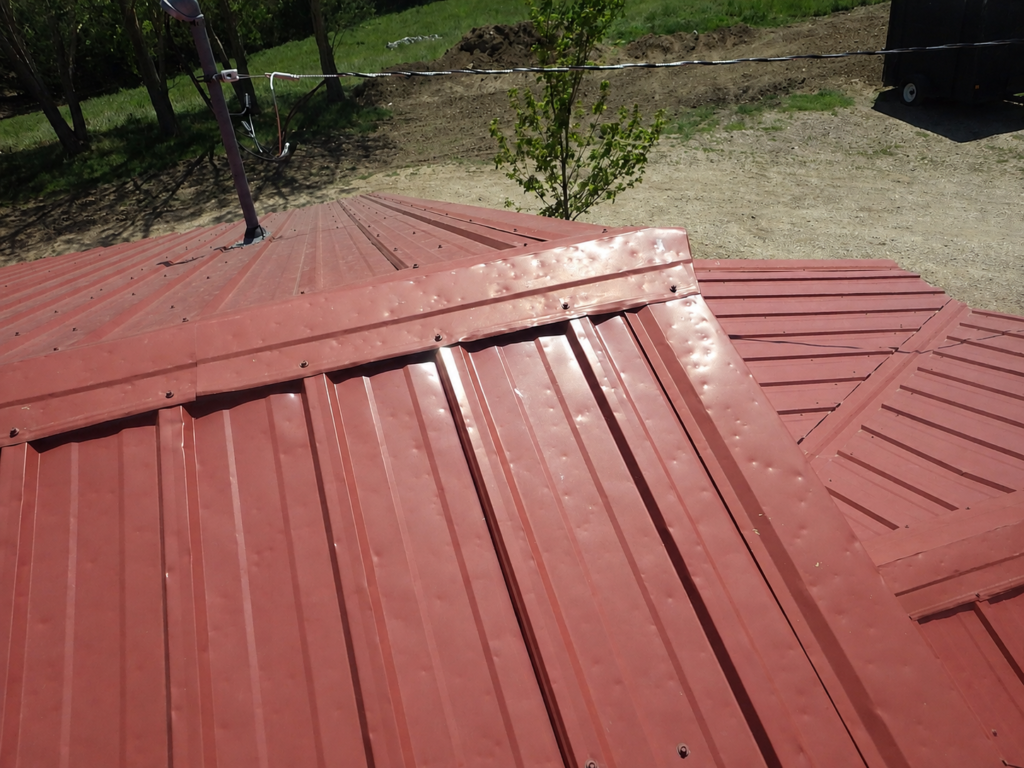
FUNCTIONAL VS. COSEMETIC
What is functional damage to a metal roof?
In a field assessment, functional damage generally refers to a storm-related physical change that impairs the roof system’s performance. For metal roofing, that usually means a condition that creates an opening or disrupts a component needed to keep water out.
Conditions that may indicate functional damage include:
🔴 Punctures, splits, or tears in a metal panel or accessory.
🔴 Deformed or disengaged seams and laps that no longer maintain their intended configuration.
🔴 Loose, displaced, or damaged fasteners and washers where the condition affects attachment or weather resistance.
🔴 Damage at flashings, penetrations, ridges, eaves, or transitions that creates or enlarges a pathway for water.
🔴 Visible coating loss, cracking, or exposed substrate where the condition raises a performance or corrosion concern within the agreed scope.
🔴 Impact-related deformation that changes drainage or water flow or otherwise interferes with the roof system’s intended operation.
A dent in the flat portion of a panel may change the roof’s appearance without creating an opening or disturbing a water-shedding detail. That condition may be cosmetic from an engineering performance standpoint. But location matters. Similar looking deformation at a seam, lap, fastener, or flashing can have a different significance.
IMPORTANT DISTINCTION
An engineer evaluates physical condition, causation, and effect on performance. The insurer applies the policy language and makes the coverage decision. The engineering report should not substitute a technical opinion for a coverage determination.
FIELD ASSESSMENT
What a visual engineering assessment examines?
KPE’s typical assessment is a visual, non-destructive evaluation unless a different scope is authorized. The engineer reviews the available claim information, inspects accessible roof and building areas, documents observed conditions, and considers whether the evidence supports a storm-related loss of water-shedding capability.
Panel profile, seam or lap configuration, fastening, slope, coating when known, and the roof’s general age and condition.
The pattern, distribution, directionality, and relative severity of marks on panels and collateral metal components.
Seams, end laps, fasteners, flashings, penetrations, curbs, ridges, eaves, transitions, sealants, and prior repairs.
Scratches, chips, cracking, corrosion, and exposed metal observable without laboratory analysis.
Accessible areas below the roof for staining, active moisture, damaged finishes, or evidence that helps identify a leakage path.
Installation deficiencies, aging, thermal movement, foot traffic, mechanical damage, corrosion, prior repairs, or pre-existing leakage.
The engineer then correlates the evidence. A water stain reported after a hailstorm does not automatically mean a hail dent caused the leak. The exterior condition, roof geometry, likely water path, interior evidence, weather history, and pre-existing conditions must make sense together.
SCOPE AND LIMITATIONS
What the visual evidence tells us?
A thorough visual assessment can identify overt damage, document the condition of critical details, distinguish many storm-related conditions from unrelated deficiencies, and provide an opinion about whether visible hail effects impaired the roof’s water-shedding function.
It cannot reveal every concealed condition. Hidden moisture, concealed clips and attachments, conditions beneath laps or flashings, and microscopic coating changes may not be determinable by visual inspection alone. A sound engineering report states these limitations. If the available evidence does not resolve a material question, the engineer can recommend targeted follow-up work rather than overstating what the inspection proved.
FOR INSURANCE ADJUSTERS
Why retain an engineer for a metal roof hail claim?
Metal roof hail claims can become expensive quickly, particularly when broad replacement is proposed. An independent engineering assessment gives the adjuster a documented technical basis for understanding what the storm did, what it did not do, and whether the observed conditions affected roof performance.
A licensed engineer approaches the assignment through observed evidence, building science, material behavior, and roof-system performance.
Separate hail-related effects from installation issues, wear, corrosion, thermal movement, mechanical damage, foot traffic, and prior repairs.
Explain whether deformation is limited to appearance or affects seams, fasteners, flashings, penetrations, drainage, or another critical component.
Site observations, photographs, diagrams when useful, and reasoned conclusions create a record stakeholders can review.
Identify whether field evidence supports localized repair considerations, broader evaluation, or additional testing—without assumptions in either direction.
Clarify technical issues, state limitations, and reduce confusion when the parties disagree about what visible dents mean.
The engineer then correlates the evidence. A water stain reported after a hailstorm does not automatically mean a hail dent caused the leak. The exterior condition, roof geometry, likely water path, interior evidence, weather history, and pre-existing conditions must make sense together.
WHEN ENGINEERING ADDS VALUE
Engineering involvement is especially useful when…
🔴 The parties disagree about whether the observed denting is functional or cosmetic.
🔴 The roof is large, costly, or technically complex, and the proposed scope has significant claim implications.
🔴 Leaks are reported but no obvious hail-created opening has been identified.
🔴 The roof has mixed conditions, such as corrosion, prior repairs, aged sealants, installation deficiencies, or mechanical damage.
🔴 The claim may become disputed, and a clear record of conditions, methodology, and technical reasoning is needed.
METAL ROOF HAIL ASSESSMENTS
Visual • Non-destructive • Evidence-based
AT A GLANCE
THE CLAIM QUESTION
Did hail change appearance—or impair the roof’s ability to shed water?
TYPICAL SCOPE
Visual, non destructive evaluation of accessible roof and building areas.
NEED AN EVALUATION?
CLEAR ANSWERS FOR THE CLAIM FILE.
KPE provides independent forensic engineering opinions addressing causation, physical condiion, and performance.
CRITICAL INSPECTION POINTS
🔴 Panel flats and impact patterns
🔴 Seams and end laps
🔴 Fasteners and washers
🔴 Flashings and penetrations
🔴 Ridges, eaves, and transitions
🔴 Interior evidence and plausible water paths
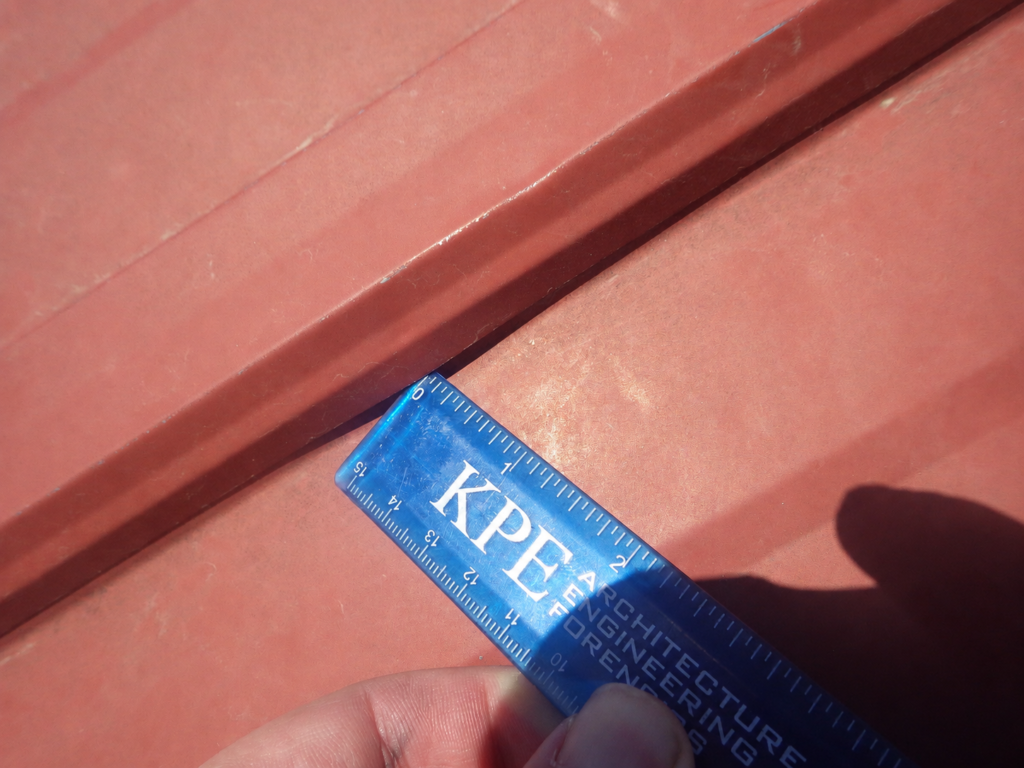
COVERAGE DISTINCTION
ENGINEERING ANSWERS THE TECHNICAL QUESTION.
KPE evaluates causation, condition, and performance.
The insurance carrier applies policy language and makes the coverage decision.
A PRACTICAL, EVIDENCE-BASED ANSWER
NOT EVERY DENT IS
FUNCTIONAL DAMAGE.
KPE has handled recurring metal-roof hail assignments this year. Our objective is straightforward: inspect the available evidence, determine what conditions are attributable to the reported event, and explain whether those conditions affected the roof’s ability to shed water.
Not every dent is functional damage. Not every leak is unrelated to the storm. Each roof and each claim must be evaluated on its own evidence.